
The Moderate
A savvy Cambridge productions creates a brilliant sythesis of form and content

At the Central Square Theater through March 1st. (but check to see if it gets extended)
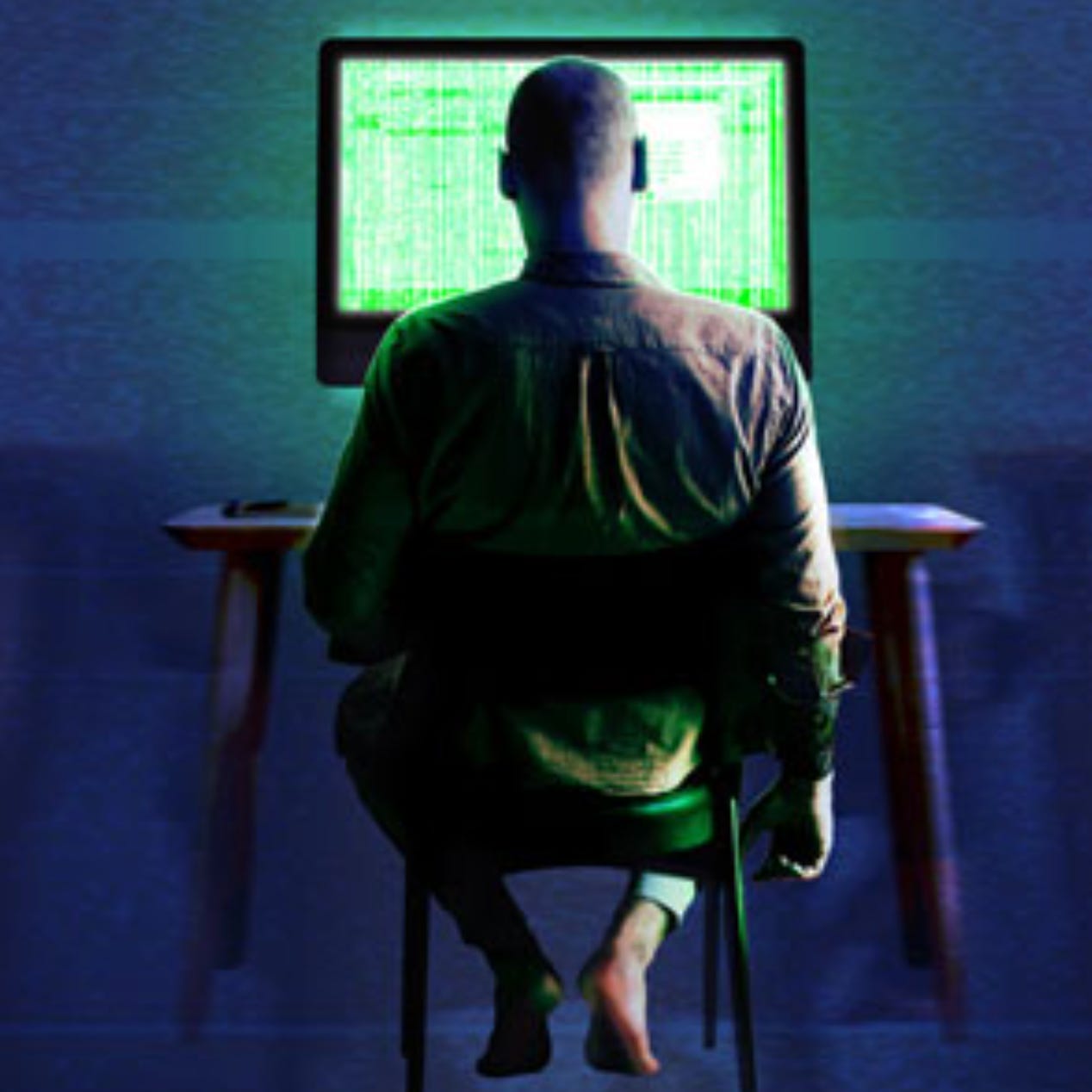
One of the most stunning Boston productions I’ve seen in a while is The Moderate at the Central Square Theater in Cambridge. Nael Nacer, the prolific Boston actor, is Frank Bonner, an out f work middle aged man recently hired to moderate content on an unnamed social media site. It is pretty clear that the platform in question has the word “Face” in it. It is 2020, and Covid is on the horizon. The isolation that will become widespread during the pandemic has already begun at home, where Frank, suddenly in need of a job, has been hired to approve or reject content surveyed from in his small room at home. He is forbidden to allow anyone to view what he sees or even to know about the nature of his job. He is separated and trying to reconcile differences. with his wife and to better communicate with his son; a character we never actually meet, but only hear about. It is a setup of virtual and actual contrasts that will play out in other ways.
Frank’s job is a real thing. The ‘accepting’ and ‘rejecting’ of content is not just a job left to algorithms. Such work can take a toll on a person’s psyche. What crosses the screen are not just images and videos like gay couples (“Accept”) or endless ‘dick pics’ (“Reject”) but traumatic scenes of violence and abuse. Some are ambiguous in nature. Others flirt with homophobia and racism. Often, there is a thin line between what will be instantly assessed and approved or quickly vanquished. Also there is the trauma of even seeing certain images
When he comes across one scene involving the pleas of a young boy, being beaten regularly by his father, Frank begins to cross that line. He wants to help to act on this reality but the hard and fast rule is - you must not engage.
The cast of five stage actors includes Greg Maraio, as Martin, the head moderator who hires and oversees the workers, Celest Oliva as Edyth Bonner, and young Sean Wendelken as the boy. There is another moderate, Rayne, with whom Frank talks regularly to get perspective and feedback. In a marvelous and convincing performance, Jules Talbot represents a younger generation, more savvy about the ups and downs and ins and outs of both the internet and how to remain emotionally distant. There are also eight credited video performers.
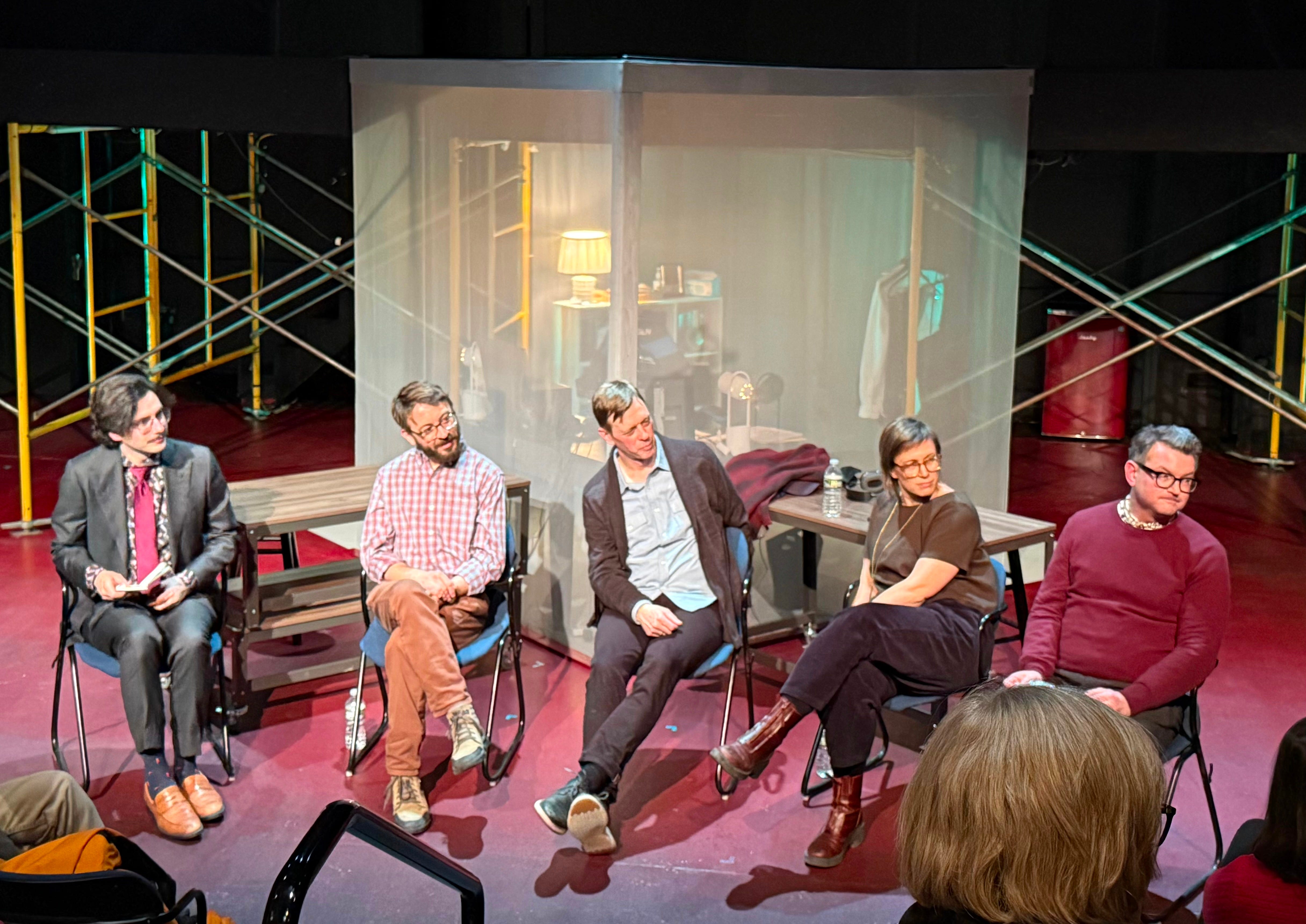
In a Wednesday talkback with Kevin Fulton, the lighting designer, Sibyl Wikersheimer, the scenic designer, Christian Frederickson, the Sound Designer and the playwright, Ken Urban, they discussed the mounting of the production. Urban said that when he wrote the play, he never imagined such a concept could be produced. But under the direction of Jared Mezzocchi, they have mounted a production that blends technology in stunning concert with the subject matter - the ethical conundrums and anomie that swirl around the exposure of unlimited visual content. I didn’t know that online content was done by humans, but apparently, this work is done by some 50,000 people around the world. Are they saints, or as Martin puts it, “garbage men”? Urban wants us to know these people exist.
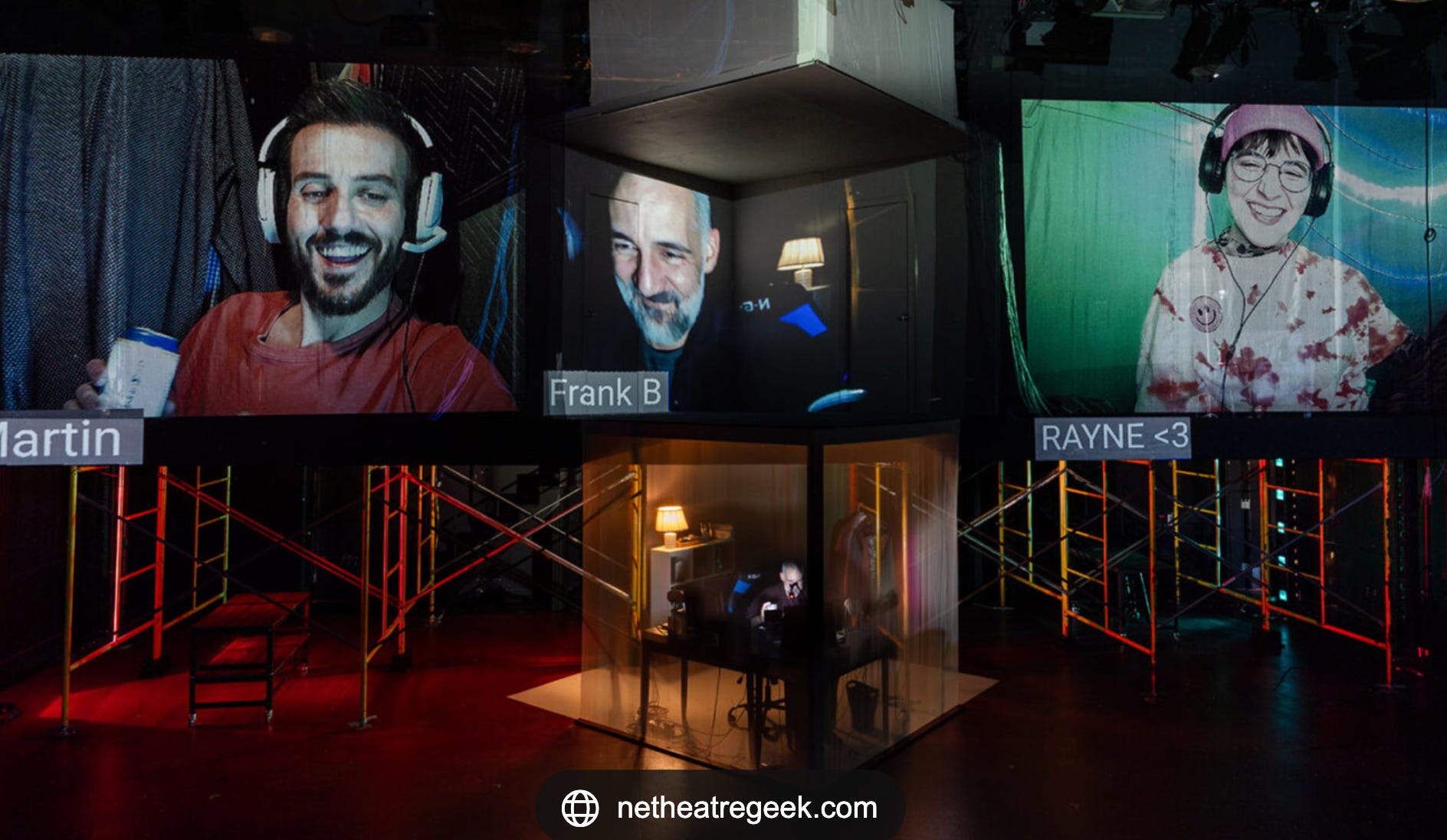
It is the technology, however, that makes the production unique and dazzles the eye. The subject matter and the production are in stirring harmony. Like the internet and single platforms such as Facebook or TikTok, the stream is overwhelming. We keep scrolling, and can journey down rabbit holes of unsavory or traumatic content. On the walls of the theater, which are draped in black, stream the images that Frank Bonner sees on his screen. As he sits at a computer housed in a square area at center stage. The walls are constructed of opaque scrim – cocoon-like - while all around him, massive images well up. Frank’s conversations with his manager and young coworker are also online and projected on all sides of the theater.
The play is constructed to move between a dizzying, anonymous environment of images and short moments in which the actors engage with the actual world as they confront issues about marriage, family, workers’ rights, and generational perspectives on technology. Eventually, when the action, or the climactic moment, moves downstage, it feels suddenly raw and real - from the vast unknown world of the web to a suddenly intimate setting.
Multimedia designer and director of the show, Jared Mezzocchi, was featured in 2020 in the NY Times as a leader at combining the virtual world with theater. In 2021, the paper said: “Mezzocchi had developed as a projection designer, the person making new images or fashioning existing footage to be shown onstage. He is comfortable in the digital realm, can create a visual environment to tell a story, and has the technical know-how to handle virtual live performances — he is a whiz with Isadora, a software that allows users to mix and edit Zoom on the spot.”
I have seen several shows using digital projections, which are a logical addition for some productions. Recently, I attended “The Arc” at the Shed in NYC . With technology designed by mixed reality pioneer Todd Eckert, the audience is given 3-D glasses. Seated in concentric circles in a huge room, four actors (including Ian McKellen) appear to speak directly to each audience member. They are watching you and, as you turn your head, can watch any one of them. Everyone experiences the same intimacy. It was unique, but ultimately the script tended to wear on a bit too long. Even so, it opens the door to new possibilities for the theater.
Another production in New York was the spectacular one-woman show, The Picture of Dorian Grey, in which Sarah Snook inhabited 26 characters. This was a whole other use of technology. Screens dropped down as the show integrated live cameras and prerecorded video, allowing her to interact with other characters – all played by the Snook. Many passages came straight from the book. Costume and make-up changes happened on stage throughout the unbroken two hours. A monumental achievement, it reimagined themes of self-invention, vanity, and the ceaseless quest for eternal youth and public acclaim into the present moment with its shrewd embrace of technology. Even cell phone screens were projected large. Rather than a gimmick, it engaged the fragmentation of identity amidst an ubiquity of mediated realities
Unlike those technology-driven productions, The Moderate is raw and immediate, achieving a smartly staged synthesis of style and idea, form and content. The images are unsettling, and the overall experience can feel confrontational, even triggering for some viewers. But the images are carefully chosen and never go over the line and are cautiously appropriate to the subject matter.
This creative group, which the program calls “A Catalyst Collaborative@MIT Production,” appears to be bringing MIT’s brain power into the work. I heard the playwright say to someone after the discussion, “I’ll see you in class tomorrow.”
The program states that they are engaging “scholars, scientists, humanists, community leaders, and activists” in discussions about themes in their work at the theater. To my mind, it is a vision that brings Boston theater into a kind relevance and education that does what art should do – challenge and educate.